The joy of Bairrada’s perfect pairing with Quinta das Bágeiras
The first time I shared a meal with a winemaker was with Gianni Brunelli in Montalcino in 2005.
Lunch was offered by Gianni as Louisa, his friend and manager of where we were staying, arranged for a tour and tasting.
It seemed like an overwhelming extension of hospitality, but the invitation was also clear: no lunch, no tasting.
The fact that Gianni was spending his afternoon with three random Americans became more baffling on arrival as we saw the photos from his restaurant in Siena where he hosts the likes of Sting and George Clooney.
Though I didn’t know it at the time, that was the day I fell in love with wine.
The next time I shared a table with a winemaker was following tastings in Bairrada while exploring the wine regions of Portugal in 2018. Late-morning appointments with Mario Sergio of Quinta das Bágeiras and then Luís Pato both turned into feasts.
Sergio and Pato are neighbors, sharing the same road as well as a philosophy that blends a spirit of innovation with a strong sense of tradition.
Like Gianni, they also share in treating wine as meant to be with food.
Home of Leitão, Capital of Espumante
Within Bairrada, the gastronomic claim to fame is its leitão, a roast suckling pig.
Blogs Portugalist and Salt of Portugal, both dedicated to helping readers as virtual tour guides, capture the prominence of leitão as a Bairrada point of pride and a traveler’s experience.
Portugalist’s “Leitão: Portugal’s Answer to Pulled Pork” describes leitão as found throughout Portugal, but it’s leitão à Bairrada that’s considered tops in the country.
It starts with Bairrada’s pigs, which Portugalist cites as given a diet of mostly acorns and generally ranked as Portugal’s best.
It also helps that Pedro dos Leitões, established in 1949 and carrying the title of the original leitão restaurant, is located in the Bairrada city of Mealhada, conferring the region’s rights to leadership over the rest of the country.
Salt of Portugal’s post “Mugasa” is titled after a restaurant in the small town of Fogueira.
Fogueira is about a 20-minute drive directly north from Mealhada, and Mugasa is a straight shot up the road from the vineyards and wineries of Quinta das Bágeiras and Luís Pato.
Salt of Portugal gives the best leitão à Bairrada to Mugasa and notes the number of winemakers who are regulars, making talk of the vineyards part of Mugasa’s atmosphere and some of Bairrada’s most impressive wines a deal on the menu at this local eatery and social hotspot.
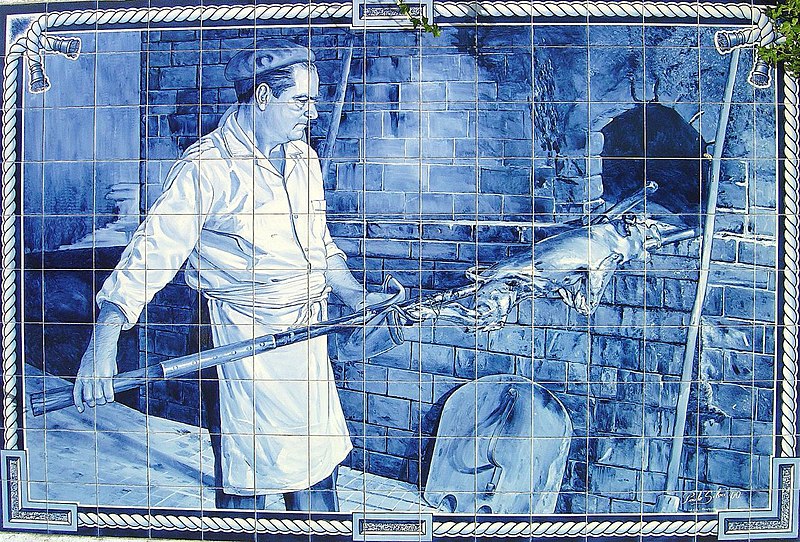
Between leitão and the vineyards, there are certainly more indications of Bairrada being leitão country than wine country.
Signs for leitão dot roadsides, and tiled murals, done in Portugal’s classic blue and white azulejos, celebrate the signature dish and provide the welcome into towns.
The vineyards may be less prominent, but Bairrada is well-established as Portugal’s capital for espumante, sparkling wine made in the traditional method.
Both the espumante and Bairrada’s second hallmark wine – a deep, luscious red – are made from the local varietal baga.
Understanding baga
Among the many contributions credited to Luís Pato in raising the profile of Bairrada is his comparison of baga to nebbiolo, the revered grape of Italy’s Piemonte.
Enough shared characteristics between the two justify the connection. Both are highly tannic, super acidic, and historically required years of bottle aging for the wine to mellow and become drinkable.
These similar qualities also made baga and nebbiolo misfits in the world of emerging wine tastes that began favoring younger, fresher, fruitier wines around the 1960s.
Nebbiolo avoided a fate of obsoletion thanks to the work of pioneering producers that harnessed technology to create wines that revealed new depths of quality while preserving a sense of tradition.
By the 1980s, nebbiolo’s super-star status was complete, as critical acclaim and bottle prices skyrocketed.
In aligning baga with nebbiolo, Pato was promising similar potential for Bairrada wines.
Though baga and Bairrada have not reached the same heightened stature as nebbiolo and Piemonte, the changes led by producers like Pato and Sergio have earned respect and recognition for the region.
Bairrada on the map is shaped like a capital L, with its long back running along the Atlantic coast, starting south of Oporto and ending at the norther border of the Lisboa region. Its curve hugs around the southwest border of the Dão region.
The coastline gives Bairrada a cooler, more temperate maritime climate compared with the hotter summers and colder winters of a continental climate for Portugal’s more inland regions like the Douro, home of port wines.
Bairrada’s cooler temperatures, which help prevent over ripeness of grapes, and the natural high acidity of baga combine as the secret to success for bubbly that stays light, lean, and crisp behind that rush of effervescence.
While the big red still wines of baga and espumante are on opposite ends of the wine spectrum, both are at home next to a plate of leitão.
Either the tannins of the red wine are curbed by the fat in the leitão, or the acidity and pop of the espumante undercuts the fat and salt for a palate refresher.
In his work at Quinta das Bágeiras, Sergio has mastered Bairrada’s iconic wines as a celebration of the expression of the land and as the perfect pairing to the region’s classic dish.
Heritage in the Vines
When Sergio combined the vineyards of his paternal grandfather, Fausto, with the vineyards of his maternal grandfather, Armando, in 1989, he established the first new wine company in Bairrada in over 20 years.
Sergio started with the 12 hectares of vineyards at Quinta das Bágeiras that were previously cultivated mostly for bulk wines.
With the support of his father, Abel, Sergio worked to uphold regional traditional and family heritage by applying advancements in understanding of viticulture and oenology to better unlock the wisdom of generations of winemaking.
On the side of tradition, Quinta das Bágeiras red wines are fermented in lagares, the large, square troughs made of stone or cement and historically used in Portugal for foot stomping the grapes.
(Trivia: The human foot is uniquely shaped for crushing grapes. As Karen MacNeil explains in The Wine Bible (2001), treading will break open the grapes skins to release the juice without also crushing the pips, the tiny seeds inside the individual grape berries, that contain bitter-tasting tannin. The churning action also helps to start mixing the juices and skins for flavor and color extraction. I can vouch for it being great fun – and a butt-kicking workout – from foot stomping the 2016 albariño in the warehouse-turned-urban winery of Oakland’s two mile wines.)
Further traditional practices include a natural approach to fermenting red wines without the boost of added yeasts, and the 11 vineyards that make up Quinta das Bágeiras continue to be hand-picked.
On the side on innovation is the diverse line-up of wines made at Quinta das Bágeiras.
There are the still reds made from 100 percent baga, still whites from local varietals Maria Gomes, bical and cerceal, and the espumante.
There are the honorary wines like Pai Abel, named for Sergio’s father, and Avô Fausto, named for Sergio’s grandfather, and there are prestige wines – labelled garrafeira in Portugal to denote wines of especially high quality.
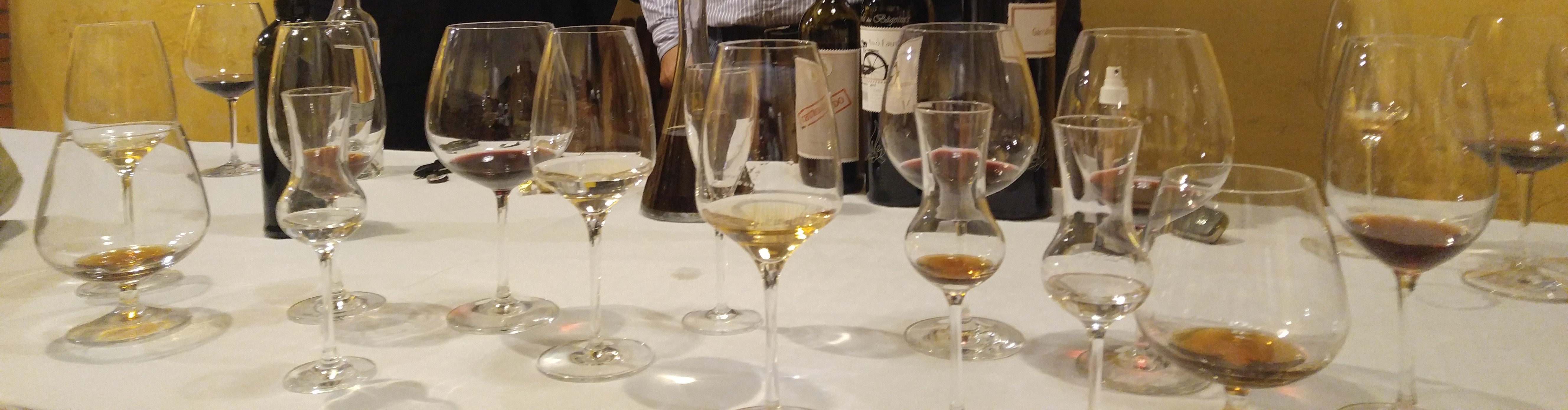
To round it off there is the aguardente, a brandy-based spirit, and a gourmet vinegar made in tribute to grandfather Armando, a vinegar aficionado. The vinegar is produced from sound wines and acidified naturally in the small renovated “vinagreira” at the winery and aged in small barrels for 10 years until the alcohol becomes acetic acid.
A fair sampling of these wines had been opened and shared during the late-morning tour and tasting with Sergio repeating between sips, “We’ll go to lunch.”
A Meal Shared
Our caravan from Quinta das Bágeiras up to Mugasa for lunch included Sergio, his assistant Ana, who carted the open bottles from the tasting in a wine bucket she could barely wrap her arms around, Sergio’s wife, and their friends visiting from Luxembourg and Basel.
Mugasa was expecting us.
With the first-floor dining room already full and alive with the chatter of people at home in their neighborhood joint, we were sent upstairs to a large corner table preset to welcome our little League of Nations.
The centerpiece of the meal was, of course, the leitão. I’d read up on it, knew – theoretically – about the wine pairing and why it works, but this was the first taste.
The leitão was served on the traditional platter, with the pieces cut into squares and thin orange slices decorating the rim. The roasting had achieved the delight of crisp and crunch on the outside followed by the melt-in-your-mouth tenderness.
With the espumante to lift and lighten the richness of the leitão, it was a case study in pairings being as much about texture as about flavor.
The real magic of the day, though, was in the universal power of sharing a table and a meal.
 Chasing Wine
Great article about Bairrada. We are glad you got to spend some time with Mario Sergio and Luis Pato and enjoyed leitão at Mugasa!
LikeLike
Thank you for your fabulous article on Mugasa! It was wonderful to learn more about Álvaro’s backstory as owner and about Ricardo being ready to keep the ovens burning as the second generation.
LikeLiked by 1 person
You are welcome!
LikeLike