Bastianich finds a homecoming in Friuli
It’s one of life’s happy coincidences that stunning countryside scenes often provide the backdrop for vineyard settings.
In the case of Friuli, a geographic pivot point between the Alps and the Adriatic and a crossroads between Near Eastern Europe and the Mediterranean, Mother Nature has bestowed bucolic hillsides with seemingly perfect soil conditions and an ideal microclimate for grapevines.
Bastianich’s first vineyard lies in deforested land of the Friuli Colli Orientali that was bought in 1997 and re-terraced and replanted between 2000 and 2002. On a clear day, the hilltop of the vineyard offers a peek of the Adriatic, which brings in sea air from the south. The Alps, positioned to the north act as a shield from bracing winds.
Haze in the distance is a result of humidity, another sign of the nearby seaside. In the vineyards, the grapes are saved from mugginess by the laws of physics.
As the earth absorbs sun’s rays, drawing in heat and energy, it radiates back a portion of the heat to the air above it. The heated air molecules start to move, spreading apart and causing the warmed ground air to become less dense and start to rise.
Cooler, denser air is pushed aside, and, with a little help from gravity, swoops in to take the place left by warmed air. The circulation breaks up the haze and keeps up a breeze over the vineyard.
“We almost never have a problem with rot,” noted Wayne Young, a New Jersey ex-pat who came to Friuli with the idea of working a stint of six-months to one-year for the inaugural Bastianich harvest, in 1998. Only he never left.
Young has been working with Joe Bastianich, the second generation in a culinary empire, since 1996, starting as the sommelier for New York restaurant Becco before signing on for the family’s wine venture.
As happens in tightknit enterprises, Young wears many hats, assisting on everything from balancing that year’s blend to marketing. Bastianich wines are the result of grapes that have been picked and vinified by variety and plot before being tasted in different blends.
“And that’s one of my favorite things to do,” Young said.
Young was also on hand for a less glamorous part of the job. During the first harvest, two large wasp nets were near the cellar.
“The grapes would come in, and the wasps would get it,” said Young, adding that he was stung every day during that first year after sustaining two to three stings in his whole life up to that point.
As a joke, Young suggested a faux tribute to their pesky mascot and incorporating the wasp on the label. The idea stuck, with the little buzzer used to designate the Vespa Bianco and Vespa Rosso blends. A theme was also born, leading to the name for the bigger, bolder Calabrone (hornet).
Though winemaking in Friuli predates the Romans, the region became known in a modern sense in the 1970s.
Friuli Colli Orientali, along with neighbor Collio Goriziano, represent the most prestigious zones within Friuli, itself a tiny powerhouse considered Italy’s top-ranking white wine region.
The soft rolling hills of Friuli Colli Orientali, more simply referred to as Colli Orientali, reach altitudes between 330 and 1,150 feet above sea level. They are rich in flysch, a combination of softer shale interbedded with thin, hard graywacke-like sandstone.
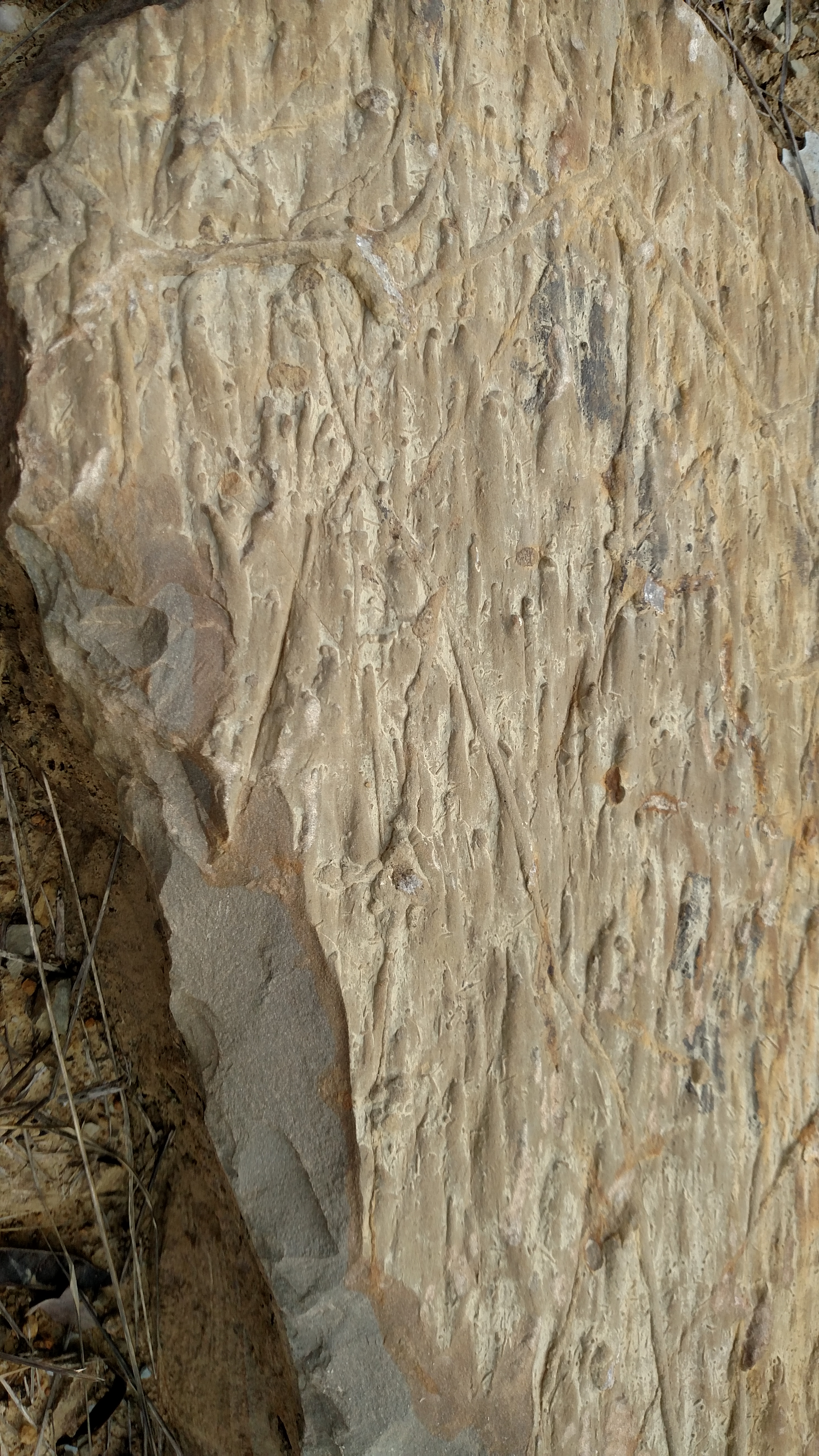
Both shale and graywacke sandstone are a type of sedimentary rock, one of the three major rock groups and defined as being formed from the accumulation of sediments.
Shale is fine-grained and the result of clay-sized mineral particles, otherwise known as mud, being compacted. It’s the most common sedimentary rock and comes in a wide range of colors, including red, brown, green, gray, and black.
Shale is laminated, meaning it’s made of many thin layers, and it’s fissile, meaning it will split into thin pieces along these laminations.
Graywacke sandstone is the result of far more dramatic forces at play. It’s mostly made of sand-size grains that were rapidly transported from a nearby source rock and deposited in a new spot.
More specifically, these deposits occurred in deep ocean water near volcanic mountain ranges and were conducted by underwater landslides and density currents that rushed the sediments into a subduction zone or an ocean trench.
A subduction zone, for geologists, marks a boundary line where two tectonic plates collided. One plate bends and slides underneath the other, causing a curve in the mantle, the hotter layer under the crust. An ocean trench is a long, narrow depression in the seafloor and is one of the deepest parts of the ocean.
When this mix of shale and graywacke-like sandstone was first cataloged by Swiss geologist Bernhard Studer in 1827 as flysch, it was used to describe the alternation between sandstone and shale commonly seen in the foreland of the Alps.
The name came from the German fliessen, meaning “to flow,” since
Studer thought flysch was deposited by rivers. The understanding that flysch accumulated in moderate to deep (up to 6,500 feet) marine waters came later.
The special local blend of flysch found in Friuli is known as “flysch di Cormons,” after the nearby city, or, less formally, as panca.
As the harder rocks in flysch break down, they become clay, giving way for the roots to burrow. Cracks that form in the clay are important for evaporation, though in hotter weather, when too many cracks form, they need to be sealed so that water stays underground and helps cool the roots.
Flysch’s color is also important in preventing overheating. It reflects the light, deflecting it from baking into the soil. In this way, flysch operates more similarly to the rock beds of vineyards in the southern Rhône that bounce the sunlight and help cool the roots.
This temperature control slows down the vine’s production, allowing the grapes more time to develop into maturity and complexity.
In colder climates, as in chilly Champagne, soil reflection is important for promoting ripening. Champagne vineyards are trained low to the ground to catch as much warmth as possible from the sun tan reflector created by a top layer of white, chalky soil.
For Friuli to be the site of the Bastianich vineyards and winery represents a homecoming of sorts. The original vineyard is located in the communes of Buttrio and Premariacco in the warmest, southernmost zone of Friuli Colli Orientali.
Matriarch Lidia Bastianich, who opened Felidia in New York in 1981 and is an Emmy Award-winning host, bestselling cookbook author, and visionary behind Eataly, a global outpost for artisanal Italian wines and foods, with locations in New York, Boston, Chicago, and São Paolo, learned the art and trade of Italian cuisine from cooking with her mother and grandmother and working in her great-aunt’s restaurant.
She immigrated to New York from Istria at the age of 11. Istria is roughly a three-hour drive from Friuli and was once part of Italy.
Borders in this area have been somewhat nebulous over the centuries. Within the 20th century alone, Istria fell under four different state powers. It was part of the Austro-Hungarian Empire until 1918, Italy until 1947, and was Yugoslavian before becoming Croatian in 1991.
Friuli’s own history is one of conquering influences, dating back to the Veneti and Celts who settled the area in the sixth and fifth centuries BCE.
Though Friuli’s gentle slopes may have offered little by way of a line of defense to would-be invaders, and its nearby sea access provided another entry point, its location at the crossroads between Near Eastern Europe and the Mediterranean may have helped Friuli from being completely overrun by each new power.
The Romans, with the armies of Julius Caesar, seemed to recognize the strategic importance of holding Friuli, turning the military outpost of Aquileia into the empire’s second city after a long struggle to claim the territory.
The Romans, in turn, were followed by the Byzantines, with Friuli connecting the markets of the Byzantine Empire to Venice through the overland spice routes. Friuli would go on to become part of the Republic of Venice, which also covered the Veneto and Trentino-Alto-Adige. Hence the trio’s broad categorization as the Tre-Venezie.
Fast forward to Italy’s unification in 1866, and Friuli joined the country of former city-states from the Austro-Hungarian Empire, which made Trieste its entrée to the Mediterranean.
Following World War II, the statehood of Trieste remained unsettled until 1954, when it was returned to Italy. However, much of the Italian-speaking Peninsula, as well as parts of the Gorizia province and some vineyards that today are part of the Collio Goriziano, were ceded to what was then Yugoslavia.
Cliff-notes history presents this narrative less as an ongoing tragedy and more as a tale of quiet but determined resilience, with Friulians finding a way to co-exist while retaining local individualism and spirit.
The preservation of terms like ronchi, used to describe the tops of terraced hillsides and often used as the first word in vineyard names, in the original Friulano dialect is one indication of how Friuli has maintained identity.
Of course, these days, its wines are also doing a lot of the talking.
 Chasing Wine
Thank you Kate! This is a great article.. super-detailed and informative and very well-written. Thanks for the kind words! It was great pending the day showing you around Bastianich.
LikeLike
So glad you enjoyed the read, Wayne! It was an absolute pleasure to write and relive the day’s tour and tasting at Bastianich.
LikeLike