Finding what makes Barolo’s vineyards tick with Cavallotto
Within wine circles, it’s a truth universally acknowledged that great wine is made in the vineyard.
It’s a nod to the fact that trends cycle, and technologies evolve, but the work of the cellar can never outstep or outshine the gifts of nature.
One area where this adage is particularly embedded in the heart and soil of wine is within the neighboring appellations of Barolo and Barbaresco.
Home to the temperamental, late-ripening nebbiolo, which is stubbornly sensitivity to its surroundings, and nestled in the lower Langhe hills, Barolo and Barbaresco are part of Italy’s Piemonte, where less than 5 percent of vineyards from this sloping landscape are classified as flat, and share a zeal for the finer details that make each vineyard the sum of its parts.
In Barolo, Cavallotto, a family enterprise since 1928, exemplifies this ethos with its cultivation of the vineyard Bricco Boschis.
Ahead of the Curve
With a planting today of 23 hectares, Bricco Boschis has a history that goes back to the 18th century, when it was owned by the Countess Juliette Colbert.
Bricco is a local term that producers in the 1960s and 70s started using in place of the French cru to indicate wines from a single vineyard. More specifically, bricco refers to the sun-catching crest of a hill.
Boschis is in honor of Guiseppe Boschis, the vineyard manager of the estate when the property belonged to Countess Colbert, and who later inherited the land from her.
Patriarch Giacomo Cavallotto acquired the whole Boschis property in 1928. Ever since, the vineyard and winery point have been the focal point of the Cavallotto family.
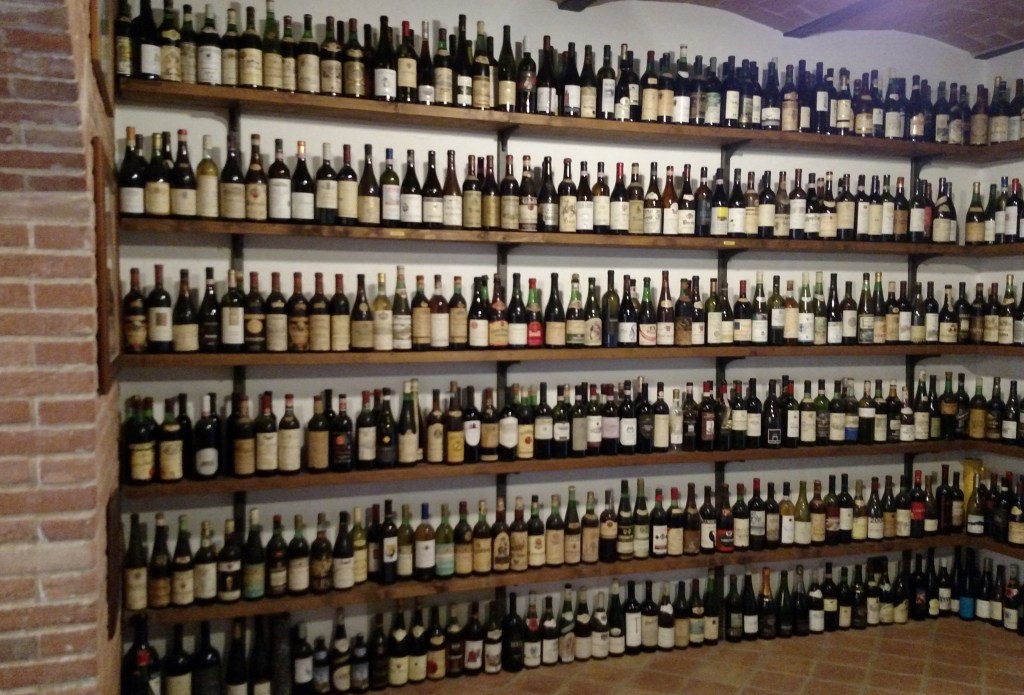
Giacomo’s grandsons, the brothers Olivio and Gildo, harvested the first vintage to sell under the Cavallotto label in 1946, releasing the bottles in 1948. Up to that point, Cavallotto primarily sold to restaurants in demijohns that held 30 to 50 liters.
The move to independently bottle put the Cavallotto family ahead of curve.
A shift toward Barolo growers vinifying and releasing their own wines wouldn’t start taking root until the 1960s and 70s.
Before then, and going back to the 19th century, Barolo’s wine scene was predominantly a négociant system. Growers sold their grapes to houses that produced the wine and sold the bottles under their own label.
Economies of scale was a driving factor in the setup.
As with Burgundy, given a kinship to Piemonte as its “enological soul mate” by Karen MacNeil in The Wine Bible (2001), laws of equal inheritance subdivided Piemonte’s vineyards over the course of generations.
Smaller plots made it increasingly difficult to reap a harvest that could be large enough to match the expense of labor and equipment of independent bottling to make it financially feasible.
However, a movement in the 1960s and 70s to focus on wines that could be achieved by one estate, rather than a blend by a merchant house, helped increase the value of land holdings. This in turn encouraged a rise in the grower-producer that could independently bottle.
It is also around this turning point that a general wisdom characterizing Barolo wines started taking hold.
Of course, general wisdom is a tricky game to play in a region whose reputation is built on the fastidious approach of its winemakers.
Surveying the Landscape
Barolo is comprised of 11 communes, including the town Barolo that gives its name to the appellation and its wines.
Wines labelled as Barolo, as with those labelled Barbaresco, are 100 percent nebbiolo, which has been grown in Piemonte since at least the 13th century.
As an appellation, Barolo has kept its same borders since its official delineation in 1966, when Italy implemented its DOC (Denominazione di Origine) system to identify and codify the standards for regions permitted to use the geographic name on labels. Though is vineyard acreage has significantly increased since then.
Of the 11 communes that make up Barolo, there is a rough east-west dividing line that follows the curves of the Rio Talloria dell’Annunziata in the north and then splits along the banks of the Rio Bussia south of the town of Barolo.
Cavallotto is located within the commune Castiglione Falletto, which is somewhat sandwiched in the middle. It’s considered part of the eastern group townships, but it has a border that rides along Rio Talloria dell’Annunziata boundary.
The separation between east and west is largely based on a distinction in the soils.
The eastern portion of Barolo is categorized as having Tortonian soils, which has a bluish tint.
To the west, the area is classified as having Langhian (or Helvetian) soils, which has a chalky beige color.
These are broad strokes, and as Burton Anderson notes in The Wine Atlas of Italy and Traveller’s Guide to the Vineyards, published in 1990, the east-west rule-of-thumb arose with the emergence of the region’s grower-producers.
Until then, the négociant system supported an awareness for the prime vineyard real estate that offered prized yields, but the practice of blending from various plots made distinguishing the traits between different areas of the region less relevant.
In a more contemporary work, Alessandro Masnaghetti, with Barolo Menzioni Geografiche Aggiuntive (MGA): L’Enciclopedia delle Grandi Vigne del Barolo (2015), adds to the centuries-old oral tradition and modern body of literature to dig deep on what makes Barolo’s most prestigious vineyards unique from each other.
MGA is an official designation that was created as an equivalent to cru, which is reserved for the French, and took effect with the 2010 vintage.
Efforts to codify Barolo’s MGAs began in the 1990s. They formalized what started with the adoption of terms like bricco or sorì, meaning the south-facing part of a slope, in the 1960s and 70s to distinguish and honor the cream of the crop that went into single-vineyard bottlings.
In his introduction, Masnaghetti cites Lorenzo Fantini’s 1879 book as the first attempt to collect and create a written record of the passing knowledge of the négociant system regarding Barolo’s top vineyards, listing them and, in some cases, including their key merits.
It was roughly a century later that anyone undertook a similarly rigorous effort to identify, chart, and rank Barolo’s vineyards.
Masnaghetti names the books of food and wine journalist Luigi Veronelli and the dedication of Barolo pioneer Renato Ratti, who, as a leader of the new class of winemakers to come out of the mid-1960s, and in holding such posts as president of the Barolo Consortium, is a figurehead in shaping Barolo as it’s known today, as taking on the compilation and classification of vineyards in print in 1970s.
He includes Ratti’s original Carta del Barolo as a tribute to the groundbreaking work. While certain aspects of Ratti’s map may now appear outdated, Masnaghetti notes that zones identified by Ratti as the highest category continue to set the standards for today.
A copy of Masnaghetti’s then recently-published encyclopedia was gifted during a visit to Cavallotto. Thankfully, the tome includes a corresponding English translation for each page to help a travelling giornolista di California getting by on limited phrasebook Italian built on high-school French.
A Family Affair
Today, Cavallotto is managed by siblings Alfio, Giuseppe, and Laura, the fourth generation, collectively holding the helm since the late 1980s. Giuseppe led the afternoon’s vineyard tour and tasting.
In an industry that often rewards big, bold personalities that can lend star power to creating a wine brand, Giuseppe is refreshingly dedicated to all aspects of Cavallotto’s work and success as the fruit of shared family labors.
Esteem for the quality achieved by Cavallotto over the years is reflected in Masnaghetti’s entry for Bricco Boschis as one of the 170 MGAs featured in his encyclopedia.
Bricco Boschis is unique in that the whole MGA belongs to Cavallotto, making it a monopole.
Cavallotto first used Bricco Boschis as a designation on its labels in 1967.
Masnaghetti credits the family as having “contributed both to the increased fame and prestige of the vineyards,” which Cavallotto subdivided into three parcels within Bricco Boschis in 1970.
There’s Punta Marcello (Marcello’s Hilltop), Vigna San Giuseppe as the middle block, and Colle Sudovest stretches across the lower portion.
All three are dedicated to nebbiolo, with the best fruit from Vigna San Giuseppe dedicated to Barolo Riserva, a designation that must meet additional aging requirements. Vigna San Giuseppe is comprised of old vines, last replanted between 1932 and 1956.
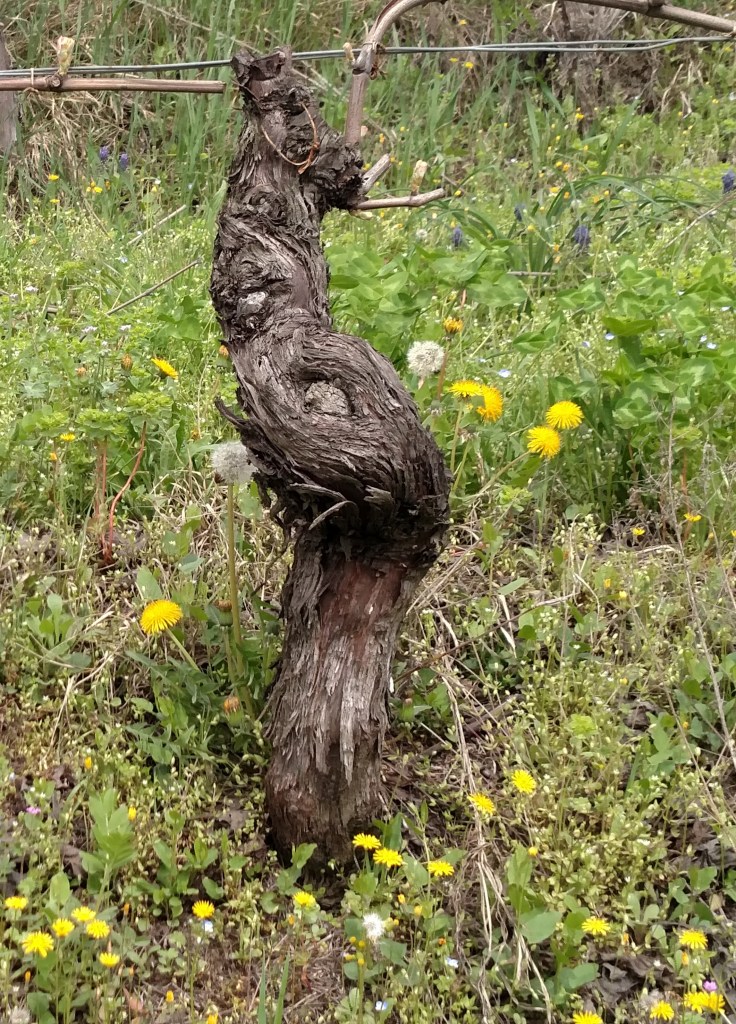
Standing within Bricco Boschi, which largely has south-southwest exposure and faces the town of La Morra, Giuseppe points to grass between vineyard rows.
The grass roots help prevent erosion on the hillside, and the growth is a sign of a lack of pesticides, which, Giuseppe notes, the family stopped using in 1975.
Soils for Bricco Boschis, which as part of that middle ground in Castiglione Falletto, gets more of a mix between the eastern Tortonian and western Langhian composition.
While it is predominantly a combination of clay and limestone, as is commonly found in the Serralunga commune further east, Bricco Boschi also has more of the sand that is associated with La Morra to the west.
Hugh Johnson and Jancis Robinson describe the wines of Castiglione Falletto as capable of marrying the power of those from Serralunga with the perfume of those from the Barolo township to the west (The World Atlas Wine; 7th edition).
This characterization follows the general east-west casting of elegance and fragrance from the Tortonian east and power and body from the Langhian west.
Masnaghetti, who dedicates his encyclopedia “To Barolo and its interpreters, no one excluded,” pokes some fun at the east-west distinction.
He questions whether the differentiation is, in fact, wishful thinking in trying to make sense of Barolo’s complexities before concluding, somewhat cheekily, “Said without any desire to offend those lucky few with a hyper-sensitive palate.”
Modern Sense on a Medieval Notion
Masnaghetti’s aside is jab at the interplay between concepts like terroir and sciences like geology and pedology.
Terroir is the concept that wine is the result of all the variables of vineyard and vintage. It’s the ideal that wine rises above tipple when it becomes an expression of time and place.
The notion of terroir is often traced to the tradition of Burgundy’s Benedictine monks, who went beyond being vignerons, caretakers of vines, and also became record keepers, writing down the growing and harvest conditions in minute detail.
Both geology and pedology have a role in terroir in the modern sense.
As the study of the origin, history, and structure of the Earth, geology has a lot of information about how a particular wine region – or vineyard – came to be.
With pedology, a branch of soil science, the focus is on the origins, characteristics, and uses of the three- to six-foot zone immediately underlying the Earth’s surface.
This is the layer that introduces factors that influence how grapes ripen and vines grow.
It’s one of the more poetic elements of wine that vineyards from less fertile soils, where vine production is limited and grape bunches have more time to concentrate in flavor by slowly maturing, yields the wines of depth, intrigue, and personality.
To know a vineyard’s pedology, is to gain a better understanding and appreciation for a wine’s structure – how well it holds its form and balances aspects like alcohol content and acidity.
And also, let’s be honest, it sounds impressive to know your schist.
Minerality vs. Minerality
In addition to information gleaned from geology and pedology, aspects of a vineyard’s terroir include climate, sun exposure, wind, and changes in day and night temperatures, and more.
However, it is important to remember that geology and pedology are sciences, and terroir is a philosophical construct.
What Masnaghetti calls out in doubting the east-west characterization of Barolo wines based on being from Tortonian or Langhian soils is the tendency to take quantitative information and make it part of the qualitative description.
He isn’t along in raising a flag.
In a 2013 article for the website GuildSomm, a nonprofit international membership organization for wine professionals, geologist Alex Maltman writes about the potential pitfalls – and inaccuracies – that comes from confusing a vineyard’s geology or pedology with a wine’s taste.
Maltman is now a retired professor from the Department of Geology and Earth Sciences at the University of Wales. He’s written on wine and beer for academic journals and popular magazines, consulted on the forthcoming World Atlas of Wine 8th edition, and authored Vineyards, Rocks, and Soils: A Wine Lover’s Guide to Geology (2018).
For the GuildSomm article, he picks up flint as an example of a mineral frequently featured in tasting notes.
Mineral, or inorganic earth, descriptors are often used for white wines and cover the stone-like qualities. Minerality with white wines can also refer to a numbing sensation of the tongue.
In addition to flint, common tasting notes for minerality include chalk, slate, wet rock, and limestone.
A store of these types of shared terms makes for an easier task in learning, discerning, and describing the thousands of aromatic compound that can be present in wine.
Accepted tasting notes cover the good (fruity, floral, spicy, etc.), the bad (skunk or rotten egg as faults, indicators that the wine has spoiled), and the weird (pencil shavings, anyone?).
When it comes to the mineral category, the common error Maltman points out is making flint, the mineral, responsible for flint, the tasting note.
Minerals, by geologic definition, are the result of elements from the periodic table that have systematically bonded together and formed rigid particles.
In this context, flint is a silicate, the most common mineral. Silicates are the pairing of oxygen and silicon, the two most abundant elements in the Earth’s crust.
More specifically, flint is a silica – a combination of pure, unadulterated silicon dioxide (SiO2) without any other elements involved.
Like all forms of silica, flint is odorless and tasteless.
To seal his case, Maltman references silica as used to make wine glasses and bottles, where the goal would be to avoid any trace flavors or aromas that would interfere with the wine’s.
Maltman and Masnaghetti offer a reminder that understanding wine by studying the vineyard is different and separate from honing a tasting palate.
At Cavallotto, both are pleasant chores. Bricco Boschis is a compelling landscape, and the craft of Cavallotto is upholding family and regional standards that make it an example of the best Barolo has to offer.
 Chasing Wine