Gaja and the road to the booming eighties
Among the first families of winemaking, the Gajas of Barbaresco hold special rank.
Angelo Gaja, whose indefatigable charm and unflagging energy in promoting Barbaresco as keeping court with the world’s highest prestige wines is well chronicled, represents the fourth generation to steward the vineyard.
Far more than a slick spokesman, Angelo’s dedication to detail, a precision that roots down the cork source, is captured in Edward Steinberg’s The Vines of San Lorenzo: The making of a great wine in the new tradition.
Angelo has passed on the leadership torch to his daughters. Gaia has stepped in as winemaker, and Rossana shares in running the business side of operations with Angelo.
Both Angelo and Gaia have publicly raised the effects of climate change to vineyards and the need for sustainable practices.
“Today, we have to find new ways to keep our vineyard alive,” Gaia told Wine Spectator in 2015, citing techniques such as controlling pests like moths by disrupting their mating with pheromones instead of using pesticides.
This type of foresight and consideration for the future seems to be something of a family trait, and the knack for being on the cutting at Gaja appears to be as old as the winery itself.
A French Revolution
Founded on two hectares (5 acres) in 1859, the Gaja vineyards date back to the first ascendency of Barolo and Barbaresco in wine renown.
Both Barolo and Barbaresco are made from the nebbiolo grape and named for the neighboring villages nestled in the Langhe hills of Italy’s Piemonte region.
Records for nebbiolo in Piemonte date back to the thirteenth century, when it was known as “Nibol.” Current aliases for the varietal include chiavennasca, its moniker within Valtellina in Lombardy.
Though both Barolo and Barbaresco can claim being powerhouse wines, Barolo is often noted as the more robust between the two and Barbaresco is considered slightly softer.
It was around the mid-nineteenth century that Barolo became known as “king of wine and wine of kings.”
Wines from Barbaresco, which sits northeast of Barolo, were also gaining in prestige during this period. By the 1890s, wines produced in the area carried the village name.
Much of the rise in notoriety for the wines of these twin hamlets is owed to French winemaker Louis Oudart.
Oudart was hired by compatriot of Victurine Colbert, the wife of Barolo’s Marchese Falletti, in the 1840s. He introduced two key changes that ended up revolutionizing winemaking within the region.
First, Oudart started vinifying nebbiolo as a dry wine, fully fermenting the grapes and bucking the tradition of nebbiolo as a sweet wine with traces of residual sugar. He also aged his wine in barrels.
The style was such a hit that Piemonte’s Prime Minister Cavour hired Oudart to do the same thing at his castle at nearby Grinzane.
Oudart’s approach started trending as members of the Savoy family bought estates in the area and established vineyards to produce wines with the Barolo designation.
Prestige for Barolo and Barbaresco as the scions of Piemonte, if not all of Italy, remained uncontested for roughly the next century.
Counterculture Clash
The luster around Barolo and Barbaresco was beginning to dim around the time that Angelo Gaja graduated from the nearby Alba school of enology in 1961.
Young Angelo joined his father Giovanni, who had presciently bought some prime plots, in managing the family vineyard.
He crafted his first single-vineyard wine from the now-storied Sorì San Lorenzo in 1967 before officially taking the helm from his father in 1970.
The counterculture generation was just starting to influence the wine scene, and Angelo seemed made for the moment.
George Taber, in setting the backdrop for California vs. France and the Historic 1976 Paris Tasting that Revolutionized Wine, recounts how a post-war economy was providing Americans with the means to travel to Europe, where they picked up a taste for wine.
Taber also makes the case that this crop of young Americans, upon reaching drinking age, wanted to distinguish themselves from their parents, who were nursed on the hard liquors and cocktails of post-Prohibition.
While it may seem difficult to take swirling a glass of merlot as an act of generational defiance, the result is indisputable.
More Americans were drinking wine, and they wanted more than just plonk.
The uptick in consumption did not necessarily spell good news for Barolo and Barbaresco.
Tastes were skewing toward younger, fresher wines, and classic Barolo and Barbaresco, with such trademark characteristics as tar, mouth loads of tannin, and long bottle aging, were terribly out of touch with modernizing preferences.
Both wines could also be said to be burdened by the weight of their reputations.
Proponents for traditional Barolo and Barbaresco propped up the rich flavors, which could also include spiced notes of licorice, leather, and violets as well as sumptuous chocolate and prunes, and cited the patient cellaring as coming together to reflect a refined palate that could appreciate such wines.
Less avid fans were raising a questioning eyebrow over whether all the hubbub could merely be a pretention to higher taste.
All in all, as Burton Anderson sums it up in The Wine Atlas of Italy: A Traveller’s Guide to the Vineyards, Barolo and Barbaresco had become the special occasion wines that people bought and never opened. By the 1970s, both wines had fallen into a deep sales slump.
Even as fate seemed ready to write off Barolo and Barbaresco, changes were fermenting within the region.
Nothing in wine happens overnight, and the new practices championed by the likes of Angelo Gaja and contemporaries such as Renato Ratti, who was leading the charge on such trends as single-vineyard bottlings, were starting to take hold in the 1960s and 70s.
With the help of a string of charmed vintages in the 1980s, the new techniques would reshape the region on a scale not seen since Oudart’s revolution and catapult Barolo and Barbaresco back into the pantheon of world wines.
The Taming of Nebbiolo
The primary focus of this emerging class of winemakers was to soften the effects of the tannins on Barolo and Barbaresco while retaining all the wines’ nuances and plush flavors.
This task ultimately meant making the most of technology that would shorten the time to complete fermentation.
While the idea sounds innocuous enough, attempting such a change struck at the core of deeply held tradition and caused a rift within the region.
Classic Barolo and Barbaresco were made with extended concentration on the grape skins. The reasoning was purely practical to start.
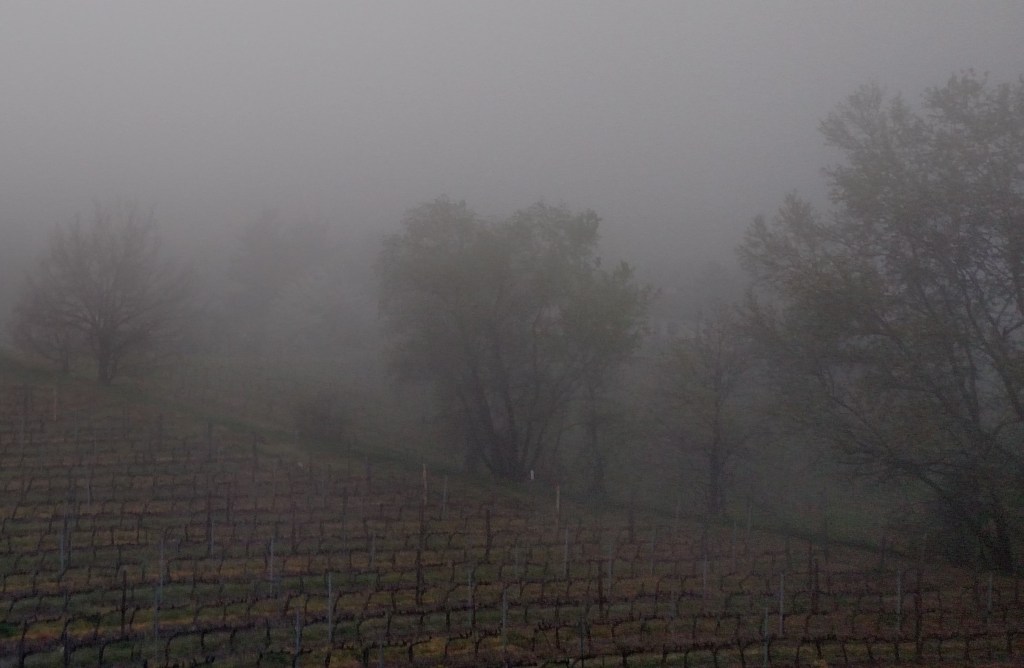
Nebbiolo is a late ripening varietal. Its name derives from nebbia, fog, which would blanket the vineyards during harvest at the end of October.
Historically, the late harvest pushed cellar work into the chilly month of November.
A dip in temperature poses a challenge for fermentation.
When conditions get too cool, yeasts become a bit sluggish in going about their business of eating the sugars from the grapes, converting to alcohol and carbon dioxide.
In the case of old-school Barolo and Barbaresco, a fermentation that chugged along in fits and starts in a cool cellar meant that the wine was steeping with the grape skins for extended periods.
Whereas white wine is made by immediately pressing the grapes to separate the grape skins from the juice prior to fermentation, red wine is made by having the juice ferment in contact with the grape skins.
Red wine draws out its color from the pigments contained in the grape skins during this time, while also extracting flavors and tannins.
Tannins, a compound found in grape skins, seeds, and stems as well as oak, act as a preservative. They help give wines their staying power and structure, but they can also impart a bitter or astringent taste.
For the most part, tannin as part of wine tasting is a tactile sensation. It can leave a fuzzy or filmy feeling on the tongue or coating on the inside of the cheeks.
Some varietals are naturally more tannic than others. Nebbiolo just happens to be chockablock full a tannin.
The end result of a highly tannic varietal, vinified with extended skin contact from a prolonged fermentation, and topped off with the traditional barrel aging introduced by Oudart, was one heavy-hitting wine.
Conventional wisdom was to let Barolo and Barbaresco rest several years in the bottle to allow the tannins to mellow and the flavors of the wine unfold.
As Anderson observes, traditional practice could produce some real winners, but the wines did not always reach the potential producers claimed.
The large oak barrels used for aging also left the wines susceptible to oxidation, which imparted odors that would be difficult to describe as anything but flaws.
Modernizing efforts led by Gaja and others to better control fermentation meant that producers could shorten and limit the amount of extraction from the grape skins.
The goal was to retain the best that nebbiolo had to offer while smoothing out some of the rougher edges from the tannin and to create wines that could be opened sooner.
Anderson notes how mediocre harvests during the 1970s likely hamstrung producers in showcasing the full effects of their innovations.
The 1980s were kinder to the vineyards, beginning with the 1982 vintage. The celebrated harvests that followed read like a dream team’s championship dynasty: 1985, 1986, 1987, 1988, and 1989.
Barolo and Barbaresco went from has-been to must-have.
Something could also be said for the outsized personality of the decade as perfectly fitting such tireless champions as Angelo Gaja and providing ideal timing for these big, bold wines with their modern makeovers to reclaim their former throne.
The king is dead. Long live the king.
 Chasing Wine