All about that peat
When it comes to the whisky aroma wheel, the more obscure notes to swirl from out of the glass are largely thanks to peat.
Peat’s pungent array can cover everything from freshly cut lawn trimmings to smoldering campfire logs, smoked meats, and salty marsh. It also lends what is collectively, and politely, referred to as “medicinal” qualities. (Fresh Band-aid, anyone?)
Love it or hate it, but peat may be the most recognizably terroir aspect to the world of whisky.
Peat – the actual turf-like substance and not the aroma – is made up of organic material as plant matter partially decays in an environment without oxygen.
It forms at a pace of approximately one millimeter per year. Give it enough lead time, a few hundred million years, under the right conditions, and peat will form into coal.
Peat’s terroir characteristics go far beyond its inherent earthiness, however. As the result of time working under specific conditions in a particular place, peat imbues whisky with an unmistakable sense of location.
Whereas other components for making Scotch – those whiskies that qualify as being from Scotland – are increasingly brought in from outside the country, peat would be incredibly difficult to outsource. Though technically not impossible. Peat grows in much of northern Europe as well as Washington State, Canada, Rwanda, New Zealand, and Australia.
Scotch’s most international feature is the cask. Made from American or European oak, most Scotch casks have either aged U.S. bourbon or been washed in Spain’s signature fortified wine, Sherry, before being used for maturation. To be Scotch, this maturation is a minimum three years that must take place in Scotland.
According to the Scotch Whisky Association, casks chalk up nearly 70 percent of a Scotch’s flavor profile. There is little wonder, then, that today’s distillers are looking beyond the traditional bourbon and Sherry casks to pull from a global spice rack.
New regulations, implemented in 2019, are providing the framework for this cask experimentation. They spell out the permissible types as long as the “traditional colour, taste and aroma characteristics of Scotch Whisky” are maintained. Casks to officially join the roster include those for making tequila, mezcal, and Calvados, to name a few.
Though the influence of casks on Scotch is significant, they do not rank as an ingredient when it comes to making single malt. That recipe remains a holy trinity of water, yeast, and barley.
The Barley Gap
While other types of grain – corn, rye, and wheat – can be used to make whisky, barley holds distinction and prestige as the one, and only, grain type for any whisky wishing to call itself single malt.
The amount of barley from outside Scotland and used for Scotch is an aspect that the BBC cheekily reported on in 2014, when Scotch sales were soaring, showing themselves to be impervious to the general funk of a recession.
At that time, the malting industry, which covers both malt distilling for whisky and beer brewing, required 1.3 million tons or barley. The barley for malt distilling outpaced that for beer to the tune of 800,000 to 500,000 tons. In 2018, the total amount of barley consumed by the malting industry increased to more than 1.5 million tons.
As the BBC noted, the practice of seeking barley outside Scotland was nothing new. Scotch may be marketed based on its romance, but it’s made based on the ability to secure quality ingredients at the best price. Countries helping to make up the barley gap included England, as well as Germany and Denmark.
The sheer order of magnitude of the barley harvest needed to keep Scotland’s stills running makes producers like Kilchoman, which grows 200 tons of barley a year for its “single farm single malt,” the exception to the rule.
Established in 2005, Kilchoman became the first distillery built on Islay in over 124 years. It’s known as a farming distillery for handling all aspects in-house, from the sowing of the barley fields that surround the site to the bottling.
Kilchoman’s island neighbor Bruichladdich works with farmers on and off Islay and is dedicated to production with 100 percent Scottish barley.
Bruichladdich’s Bere Barley 2008, released in 2017, was the distillery’s first take on revitalizing an ancient strain. Bere (pronounced “bear”) is Britain’s oldest cereal crop and can be traced back to roughly 5,000 years of agriculture.
Once the stuff used by the Highland’s illegal distillers in the 17th century, Bere is now predominantly grown in the northern islands of Orkney and the Shetlands.
Both Bruichladdich and Kilchoman have lineups featuring the peated style. On the whole, peated Scotch makes up about 10 percent of production.
Unpeated whiskies can by found on Islay, but, by and large, it’s peat that has given the island its whisky reputation.
Peat Country
Located off the southwestern coast, the Isle of Islay is roughly a two-hour ferry ride from mainland Scotland.
Nine distilleries currently operate on Islay. The levels of peat in their single malts range from the milder Bowmore, the island’s oldest distillery, to the heavier smoked-meat notes of Lagavulin, recognized as sparking the peated trend in the 1990s, to the unabashedly peated Ardbeg and Laphroaig.
In 2015, in celebration of its 200th anniversary, Laphroaig launched its Opinions Welcome campaign, inviting fans to write their personal odes and reviews.
Some of the more colorful, and memorable, submission describing the Laphroaig experience have been printed on ceramic tiles that line the wall to the visitor center. (“Like kissing my grannie who smoked 40 a day but with all the satisfaction and joy of reaching the summit of a Himalayan peak.” – Doug Dean, friend of Laphroaig since 1998)
Based on a ranking by ScotchWhisky.com, using 2017 data from IWSR Magazine, Laphroaig is the top-seller of Islay single malts. It stands eighth out of 10 of all best-selling single malt Scotches.
Peat may be a collective trait of Islay whiskies, but to simply categorize them as “peated” is selling them short. For the island has its own particular brand of peat.
Highland peat, which grows alongside more wooded plants, is known for imparting earthier notes. Peat from the Orkney Islands is considered as having a more floral element.
Whatever the type, it’s estimated that peatland covers roughly 20 percent of the country, according to Scotland’s Soil, a website hosted in partnership by five agencies, including the Scottish Environment Protection Agency, James Hutton Institute, Scottish Natural Heritage, Scottish Forestry, and The Scottish Government.
According to Benny, bartender and tour guide at Laphroaig, peat makes up 70 percent of Islay.
Islay is blanketed in a peat that predominantly derives from Sphagnum, a larger family name that encompasses different species of “bog-mosses.”
These mosses retain water after surrounding soils may have dried out, providing the dampened conditions that prevent the decay of dead plant materials. This collective organic material is what slowly gets compacted and compressed over hundreds of years to form peat.
The high amount of Sphagnum in Islay’s peat is what gives it the distinctly phenol-forward notes, which are those medicinal aromas.
Phenols are a group of chemical compounds that occur naturally in sources like peat but are also often synthesized.
A sub-category of phenols is cresols, which frequently work their way into disinfectants and deodorizers because of their ability to dissolve other chemicals.
Cresols can also be found in Sharpie markers and a particular type, meta-cresol, is a common ingredient in antiseptics.
So, if a whiff off the old dram triggers scenes of hospital halls or drugstore aisles, it’s not the nose playing tricks. Chemically speaking, the scents are all related.
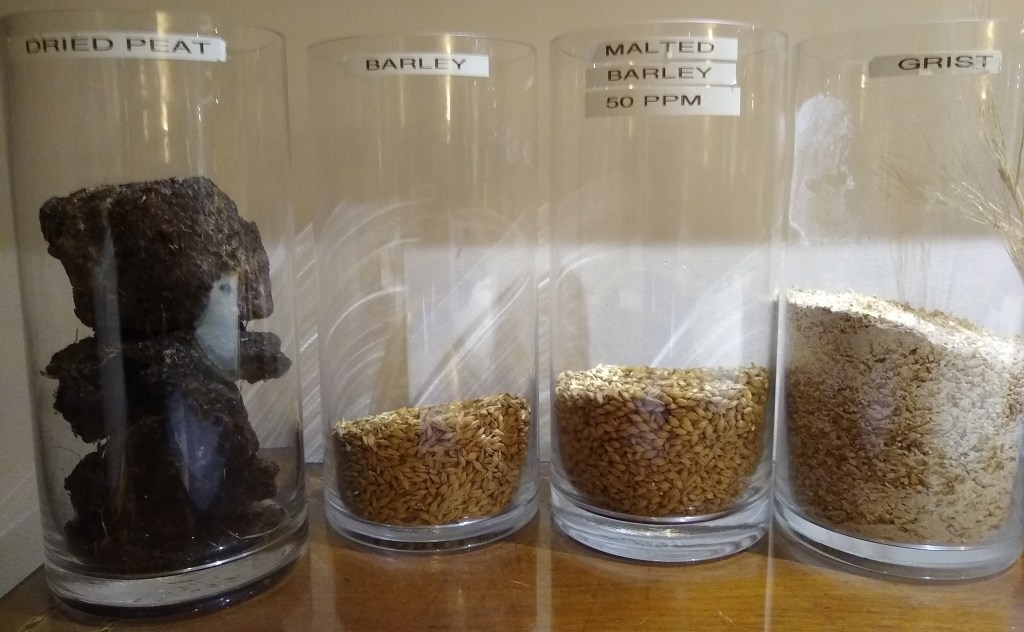
References to a whisky’s “peatiness” is really another way of talking about its phenolic levels. Heavily peated whiskies like Lagavulin and Laphroaig can have phenolic levels of up to 50 parts per million.
Bruichladdich runs the gamut of unpeated whiskies to the Octomore, the distillery’s proclaimed “world’s most heavily peated single malt.”
Octomore is produced in several editions. The Octomore Masterclass 08.3 has a phenol level of 309 part per million, topping the record for peatiest whisky previously held by Octomore 06.3 (phenol level of 258 parts per million).
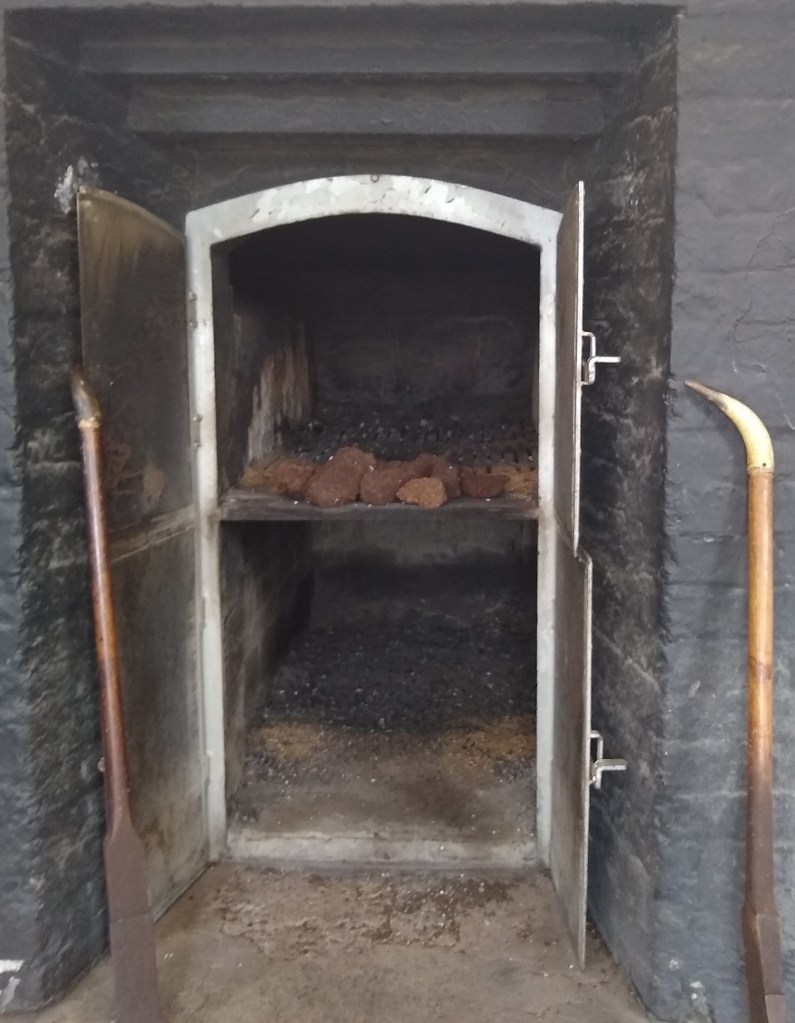
Whatever the amount of peat, it’s infused into the whisky as part of the drying stage for malting.
Malting is the process for getting barley to release its sugars so that fermentation can take place. It’s done by lending Mother Nature a helping hand.
Malting starts by soaking barley seeds in warm water, “tricking” them into thinking that it’s spring so that they germinate.
This little kickstart into reproduction releases enzymes that convert starches into sugars and help break down protein walls within the seeds into something that yeasts can eat.
Before the seeds fully sprout, they’re drained from the water and dried. Historically, drying was done in kilns fired by peat logs.
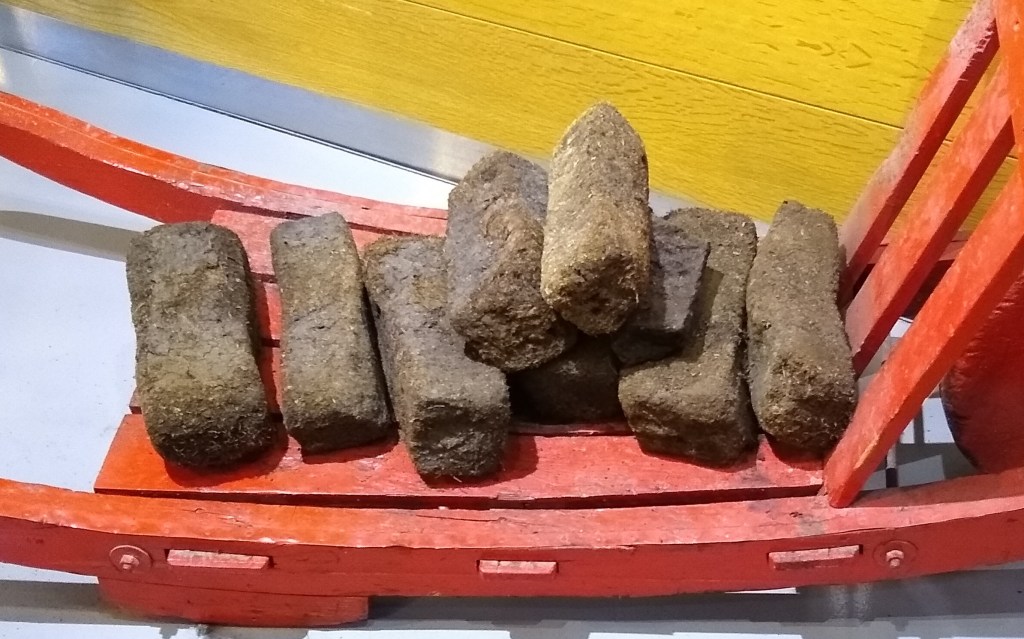
Peat logs, which look like oversized mud bricks, perhaps with a stray grass blade or other piece of earthly debris here and there, were an important fuel source in Scotland. They helped make up for a lack of forestry within the country.
Today, peatland is a key ecological player in climate change. By storing all that organic matter, peat helps keep a lid on a source of CO2 emissions.
One of the reasons that Scotland generally, and Islay specifically, is rich in peat is owed to climate.
The relatively cold and wet conditions mean that the organic material does not break down as quickly as it would in warmer, drier areas. Instead, it all becomes packed in the soil.
That is, until it becomes the smoke that wafts hundreds of years of ecological work, burning a trace of Scotland, into a single sip of whisky.
 Chasing Wine