Whisky’s secret ingredient
The first thing to know about single malt whisky is that it’s made from three ingredients: barley, yeast, and water.
The second thing to know is that most of the kaleidoscope of flavors comes from the casks used for maturation.
Just how much of an imprint the casks leave behind is a matter of debate.
In Whisk(e)y Distilled: A populist guide to the water of life, Heather Greene cites the Scotch Whisky Association as crediting casks as responsible for close to 70 percent of a whisky’s flavor.
Greene then counters with distiller Chris Morris, from the U.S.-based Brown-Forman, the powerhouse behind Jack Daniel’s. Morris scales back casks’ contribution as being nearer 50 percent.
Walk into one of Scotland’s distilleries, however, and most people will say the flavor owed to casks is somewhere in the 80 to 90 percent range.
One reason for the wide swing in answers is a matter of style. The lighter the new make spirit, the clear liquid to come out of the spirit still, the more impressionable it will be to the influence of the cask.
Distillers also face a cascade of choices – from cask size and shape to age and origin – that will enhance or temper the effect of the wood.
Unlike their counterparts at wineries, where a full dossier on the barrels used for aging is readily available, distillers are notoriously tight-lipped when it comes to cask details.
The hush-hush nature certainly adds to the mystique of casks as making up the secret sauce. There is also a widening array of cask types at distillers’ disposal. To overlook them as an ingredient feels like cooking but leaving out the spice rack.
Seasoning Power
Generally speaking, new make spirit, or “clearic,” has a relatively soft aroma of mostly yeasts and cereals. An active whisky distillery smells more like a working bread bakery, with wafts of rising dough, than a traditional dram.
Much of the nuance and dimension, with flavors ranging from baking spices to dried fruits and nuts to chocolate shavings and coconut, associated with whisky is coaxed out of the casks.
At Royal Lochnagar, the backyard neighbor of Balmoral Castle, Gordon Muir leads a nosing of different cask types to illustrate their varying seasoning powers.
Muir, a whisky sommelier if there ever was one, speaks with a rapidity that is difficult to keep pace with and comes at a clip as if he himself cannot brace the tide of information pouring forth. With Royal Lochnagar only the second stop on this whisky trail, he is a most welcome encounter.
As we make our way from cask to cask, the differences between ex-bourbon and ex-Sherry casks – the two main categories – become immediate.
Ex-bourbon casks are more robust, with richer aromas of chocolate, coconut, and banana. Ex-Sherry casks are more finessed, with hints of dried fruits and spices like nutmeg that come together to create a combo that is popularly described as “Christmas cake.”
How strongly these flavors are infused into the whisky depends partly on how long the clearic is left to sit and steep within the cask.
It is during this period that two percent of the liquid evaporates per year, becoming the angels’ share. (As Muir noted, if there is a great beyond, we’ll know we’re headed the right direction if we smell whisky along the way.)
For whisky to be labelled “Scotch,” it must mature for a minimum of three years in warehouses in Scotland, though for many age-stated whiskies it is much longer.
In addition to the length of time, other factors during this maturation process include the cask size and shape, which will determine the amount of surface contact between the liquid and the oak, and its age, which is based on how many times it’s been used previously and affects how much punch it has to give.
Younger casks are fresher in flavor. Fewer of the compounds, such as lignin, which is also found in vanilla, have been extracted.
Some distilleries are tinkering with new, or “virgin,” American oak as part of the marriage, the particular combination of casks that come together to create what’s bottled.
While distilleries will disclose the type of cask used as ex-bourbon or ex-Sherry, or a marriage of the two, part of guarding the cask secrets is keeping the proportion under wraps.
Even the origin of the oak for the cask as American or European is rarely specified.
American oak trees grow taller, with smaller leaves and more striations in colors. They lend sweeter notes, such as butterscotch and caramel, and give a lighter color.
European oak trees are stockier, taking longer to grow, and season with a spicier touch, such as nutmeg. The color to come off European oak casks gets into deeper hues of red.
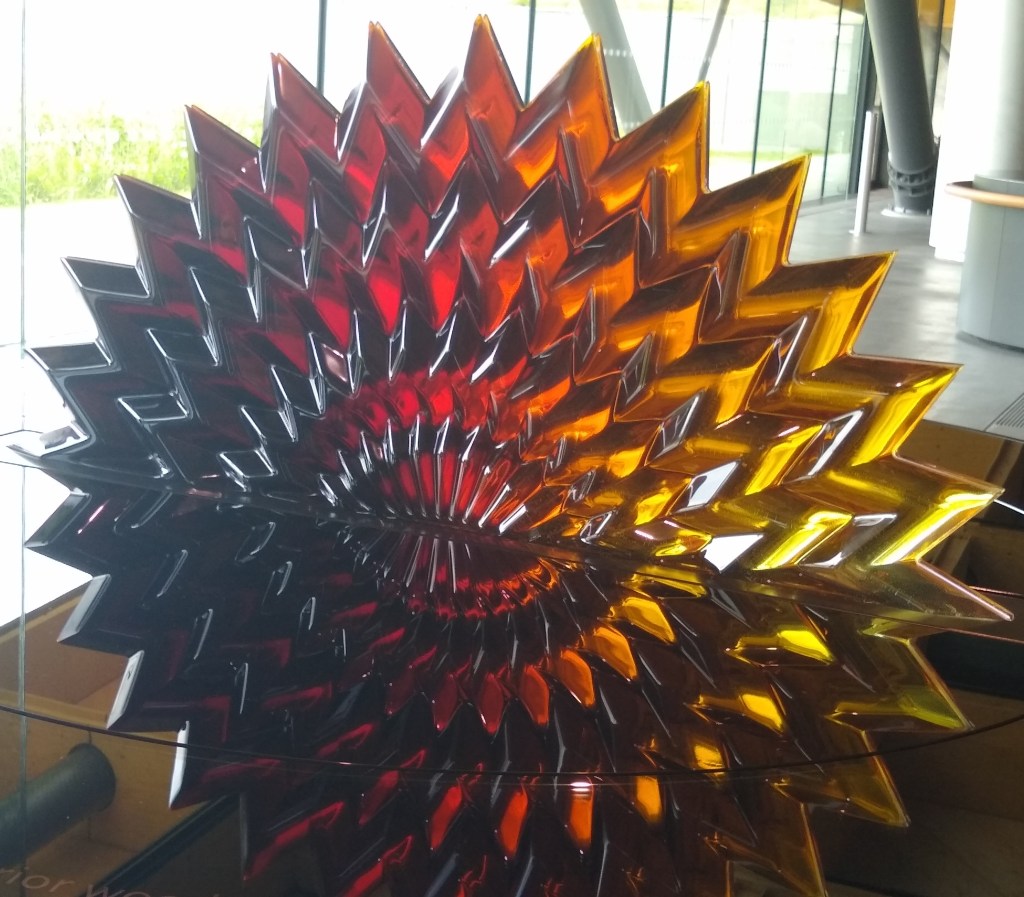
At Macallan, the significance of the casks, and their source, is rated so highly that the distillery has a designated position for someone to monitor and select the individual trees that will be coopered. Trees are felled between 80 and 120 years old and DNA tested.
It may be tempting to classify ex-bourbon casks as being American oak and ex-Sherry as European, but Sherry can be aged in either. Sherry producers began using American oak as long as two centuries ago.
Use of Sherry casks by Scotland’s distillers goes back even further.
Tradition and Experimentation
Historically, Sherry, other wines, and rum casks were all used for maturing whisky. Without domestic forests that could be felled for making casks, Scots employed a bit of reuse, recycle by refilling the casks that traveled through their docks at Glasgow and Leith, the port city north of Edinburgh.
Sherry, a popular tipple in Scotland in the eighteenth century, eventually rose as the preferred style.
Casks used for shipping Sherry were different from the ones used to mature the fortified wine through the solera system in its homeland of Jerez. They were often made from fresh wood and would only make a few trips between Spain and Scotland before being turned over to distillers.
As a result, the casks arriving in Scotland were still relatively young, with plenty of juice left for imparting flavors into the whisky.
Between the mid- to late-nineteenth century, Scotch would experience its first global boom. (In 2018, 41 bottles of Scotch were shipped overseas every second. For those keeping score at home, that pencils out to nearly 1.3 billion bottles in a year.)
The growing export market began with finding a foothold in England in the 1860s. By the 1880s, the race was on to claim market share in such far-flung places as Australia, Hong Kong, and southern Africa as enterprising distillers tapped into a newly created trading network built on the coattails of an expanding British Empire.
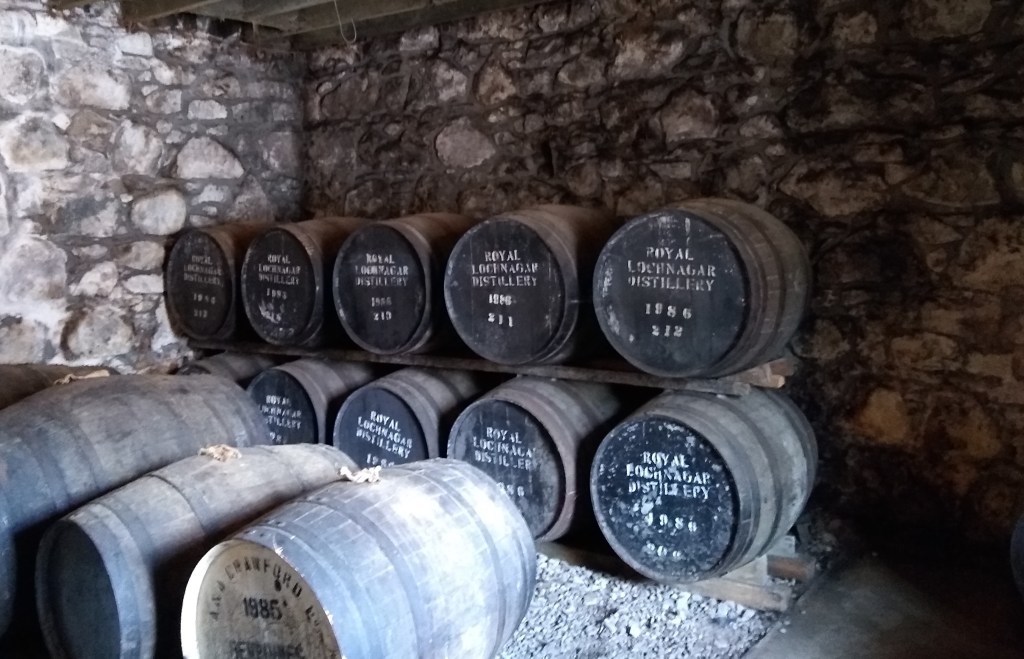
In a rather unfortunate stroke of happenstance, however, the volume of Sherry casks being imported to Scotland started to decline just as this growth in demand was taking place.
Blender William Phaup Lowrie, the agent for González Byass Sherry, found one solution.
Lowrie imported new oak from America, coopered the casks in Glasgow, and treated them with Sherry to replicate the shipping conditions and lend the dried fruit notes of apricots and figs to the whisky.
Lowrie’s ingenuity underscores just how indispensable these one-time cargo containers had become to the whisky palate.
Fast forward to 1986, and the supply of Sherry shipping casks was officially cut off. New requirements mandated that all Sherry had to be bottled in Jerez.
Many distillers responded by following Lowrie’s example and worked with cooperages to make casks to their specifications.
Today, ex-Sherry casks are often difficult to obtain and expensive. Enter bourbon, Scotch’s American cousin.
U.S. law limits bourbon casks to a one-time use, making them more widely and easily available. In summer 2017, Whisky Advocate noted that nine out of 10 casks used to mature whisky in Scotland started in bourbon or Tennessee whiskey casks.
While ex-Sherry and ex-bourbon continue as the major players of tradition, both practice and new laws are cracking open the door of experimentation and introducing new casks types.
Releases in recent years that show the results of some creative tinkering include Dalmore’s King Alexander III, a combination of six cask types: ex-bourbon, oloroso Sherry, Madeira, Marsala, Port, and cabernet sauvignon.
Glenfiddich, the first distillery to truly market itself as single malt, recently experimented with IPA casks.
This June, Scotchwhsiky.com reported on the amendment to the Scotch Whisky Technical File that defines which casks can – and cannot – be used for maturation.
The new rule sets the potential for such cask types as those previously used for tequila, mezcal, Calvados, barrel-aged cachaça, shochu, baijiu, and other fruit spirits.
The caveat is that the end result “must have the traditional colour, taste and aroma characteristics of Scotch Whisky.”
As the lineup of cask options grows, it brings light to the international components that go into making Scotch, making the spirit’s process almost as global as its appeal.
A taste for experimentation, and the ensuing push for greater creative license, could be traced back to the once-controversial idea of finishing.
After a whisky is considered as fully matured, it may take a dip in a second cask for the sole purpose of infusing additional aromas and flavors. This step is known as finishing.
Two distilleries, Balvenie and Glenmorangie, are credited with introducing the idea of finishing, with their first efforts hitting shelves in the 1980s.
As happens, what was radical to one generation became but the launching pad for pushing boundaries for the next.
Despite this spirit of innovation when it comes to the flavors and complexity that casks can offer, the tradition of just three ingredients is a hard one to shake.
Occasionally, time, when clearic evolves into whisky within the cask, is talked about as the fourth, and secret, ingredient. The casks themselves, though, have a hard time making the cut.
At Oban, located in the West Highlands at a seaside town of the same name, the best perspective is given.
Ingredients remain reserved for the raw materials of the new-make spirit. (Peat unearths a whole different layer for consideration.)
What casks provide, then, is character. Bestowing whisky with its unique personality as it develops in complexity out of the clearic.
It’s not called maturation for nothing.
 Chasing Wine